Monday, 4 March 2013

Rare metals

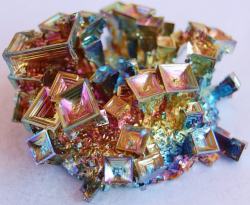
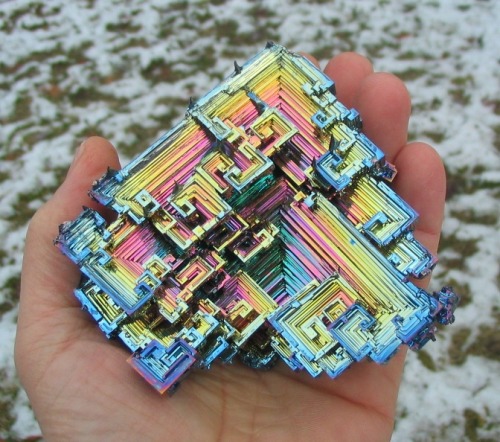
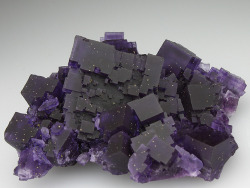
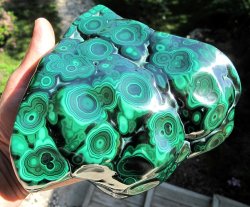
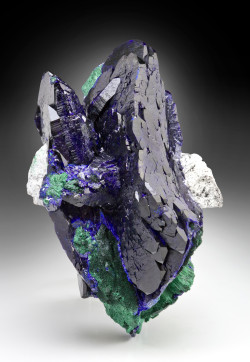
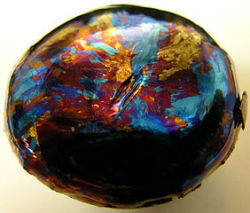
These are some gorgeous pictures I found on tumblr. These are naturally occurring crystal formations. 


Bismuth

Flourite

Azurite/ Malachite

Pietrisite


Hafnium


Friday, 1 March 2013

Molecular gastronomy - where food and lab meet


Chemistry is a big part of our lives, even if we don’t realize it. Mixing ingredients, putting them in the oven and getting a completely new thing is actually a very complex reaction. But beyond just the science of food there’s the search of many chefs to be ahead of times when it comes to cooking, and molecular gastronomy is a very controversial and different type of cooking.  

Fruit caviar 

Hervé This and Nicholas Kurti felt the need to investigate cooking in a different way. Both had scientific background but a love of food and cooking, and most important, curiosity about what happens when you cook. They are the fathers of molecular gastronomy as a research area, which is different from food science, it takes advantage of many scientific principles used there but on a smaller scale, such as the use of emulsifiers. Molecular gastronomy could be considered a branch of food science, but food science is concerned with analysing the chemical makeup of food and developing methods to process food on a large scale.  

The term has now been adopted to describe a style of cuisine. Many have incorporated unconventional ingredients to their cooking to bring different textures and flavours to their creations. Pictured above is a ‘fruit caviar’ which was first developed by Ferran Adrià, the chef of El Bulli Restaurant in Catalonia, Spain. The technique is known as spherification, which involves making liquid-filled beads that explode in the mouth. Spherification relies on a simple gelling reaction between calcium chloride and alginate, a gum like substance extracted from brown seaweed.  Chef Adrià is one of the most important names in molecular gastronomy, as well as Chef Heston Blumenthal from London’s ‘TheFat Duck’, pictured bellow.


Chef Heston Blumenthal

Using liquid nitrogen to achieve fluid-filled fare is another popular technique. When food is exposed to extremely low temperatures it will be frozen on the surface, liquid in the centre. The technique is typically used to develop semi frozen desserts. It is also common for molecular gastronomists to play with food flavours, making very strange flavour combinations, such as strawberry and coriander, pineapple and blue cheese, and cauliflower (caramelized) and cocoa. They have learned that foods sharing similar volatile molecules -- those that leave food as a vapour in a similar way -- taste good when eaten together.

Many other techniques are used in this style of cuisine, such as making foams by using hydrocolloids or carbon dioxide, thermal immersion circulator for sous-vide (low temperature cooking), food dehydration, using syringes to inject fillings, amongst others.

Even though this style of cooking is popular to date, there has been plenty of controversy around it. Some people think the additives are unhealthy and some ingredients have been banned in countries like Italy. There has also been controversy when it comes to the name, some chefs don’t want to be associated with the name “Molecular gastronomy” and some do. And also, very important representatives of this type of cuisine have distanced themselves lately from this style of cuisine; chef Ferran Adrià announced that he will close his restaurant.  If you are against or in favour of this type of cooking, one thing can be agreed, molecular gastronomy shows how science and cooking can go hand in hand to create new things. It brings the lab to our tables and can satisfy the curiosity of a lot of people. Is the movement dead? It’s too early to tell, this young style of cooking might only be evolving. 


Personally, I am very curious about it, being a chemist and all, I really want to go to a molecular gastronomy restaurant, which I haven't been able to do, plus, I would love to get my hands on some of the equipment to make my own little master pieces at home, the kits can be found on Amazon.


Thursday, 14 February 2013

Nanoparticles and you


Not many people guess that I'm a chemist. Yes, I even have a PhD that I just finished at the University of Birmingham (UK). I want to share an article that I wrote for www.satnavmag.org (Satnav magazine, a student run scientific magazine for the general public), it was published in July 2010.


Nanoparticles and you

What comes to mind when you hear the word nanoparticles? Some people might think of killer nanobots that will attack the planet, such as in The Prey by Michael Crichton, where they infect our brains and create a zombie infested world. The truth is far from that. In actual fact, nanoparticles are all around us right now, found in some of the things that we use every day.

So what are they?

Nanoparticles are usually defined as particles that range between 1 and 100 nm in size. A nanometre (nm) is one thousand millionth of a metre or 0.000000009 m, so it is pretty small! To illustrate this, the size of a human hair is between 25000 nm and 180000 nm wide, and bacteria are around 100 nm in diameter. Approximately ten hydrogen atoms in a line make up one nanometre.

How long have they been around?

Nanoparticles have been used for a very long time. It is just that we have only recently begun to understand what they are. Gold nanoparticles, which are red when they are as small as nanometres, were used in the past to stain glass. Medieval artisans made stained glass by mixing gold chloride into molten glass. They created tiny gold spheres that absorbed and reflected sunlight in a way that produced a variety of colours, without truly knowing what they were making. The artisans knew that by putting varying and tiny amounts of gold and silver in the glass, they could produce the effects found in stained-glass windows.

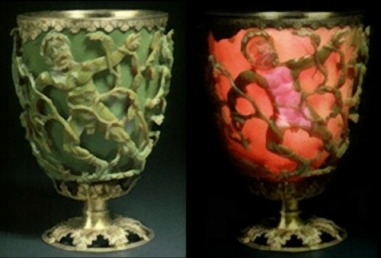
The Lycurgus Cup, which was made by the Romans, dates to the fourth century AD (Shown bellow). When viewed in reflected light (in daylight), it appears green, and when a light is shone into the cup and transmitted through the glass, it appears red.


The Lycurgus Cup from Roman times containing gold nanoparticles exhibited at the British
Museum, here displayed under different light sources.

When were nanoparticles first synthesised? 

Nanoparticles were first synthesised by Anthony Turkevich in the early 1950s, who incidentally was the same man that first determined the composition of the moon’s surface. Ever since then they have been widely used as contrast agents for electron microscopy (used during imaging examinations to highlight specific parts of the body and make them easier to see), cancer research and as carriers for drugs.

Silver antibacterial nanoparticles

Silver nanoparticles are widely used because of their antibacterial properties; silver acts against the bacteria by destroying or deactivating the enzymes that allow oxygen intake of the organism, and by destroying the cell membrane. As a result, the organism’s DNA cannot make replicas of itself, let alone create possible resistant strains. Silver nanoparticles are also non-toxic and don’t suppress the immune system. Socks, paints, bandages, and food containers incorporate nanosilver to exploit its antimicrobial properties. In clothing such as socks, nanosilver may restrict the growth of pungent bacteria.

Nanoparticles in clothes

Garments coated by silver, gold and palladium nanoparticles were shown at a fashion show in New York in 2007. The work was performed by designer Olivia Ong (Department of Fiber Science and Apparel Design from the College of Human Ecology), and the nanoparticle coated fabrics were made by Professor Juan Hinostroza.

One garment is claimed to prevent colds and flu and never needs washing (as bellow on the left of the image), and another destroys harmful gases and protects the wearer from smog and air pollution (as shown below on the right of the image). 


The dress (left) is made of cotton covered with silver nanoparticles that can deactivate bacteria. The hood, sleeves and pockets of the jacket (right) contain palladium nanoparticles that act as catalysts to reduce the negative effects of pollution.


Dipping positively charged cotton into a negatively charged silver nanoparticle solution resulted in the particles clinging to the cotton fibers. Firstly, positively charged cotton fibers were made by using ammonium and epoxy based reactions, which served to induce positive ionization. The silver particles, which are about 10-20 nanometres across, were synthesized in citric acid which prevented the nanoparticles from sticking together. The resultant colors are not the product of dyes, but are instead reflections of manipulation of particle size or arrangement. The problem with these types of fabrics is their price; for 90 cm2 of the fabric you would have to shell out 10,000 American dollars!


Nanoparticles in appliances 


In addition, Samsung has incorporated silver nanoparticles into a washing machine, which is known to release the particles during washing. They penetrate deeply into all kinds of fabrics, creating a protecting coat of sterilisation for a maximum of 99.99% disinfection, as well as an added antibacterial effect which can last for up to 30 days after washing. These nanoparticles are also used in fridges and air-conditioning, in order to prevent bad smells.

Other uses

Another commonly used nanoparticle is silicon oxide. Silicon oxide nanoparticles are used in the cosmetic industry, for biomedical applications and also in solar cells. Cerium oxide nanoparticles have recently been used in the petrol industry where they are added to diesel to reduce fuel consumption, greenhouse gas emissions (CO2), and particulate emissions.

Nanoparticles of iron oxide are very interesting because of their magnetic properties, and are widely used for medical applications. Over 300 sun creams in the market today contain titanium oxide and zinc oxide nanoparticles. By replacing traditional forms of ZnO and TiO2 with nanoparticles of these substances, manufacturers can reduce the visibility of the cream paving the way for ‘invisible’ sun cream.

What are the effects of nanoparticle use?

One of the biggest issues with nanoparticles is their possible toxicity and effect on the environment after they have been disposed. Regulatory bodies in the U.S. and Europe have started dealing with the potential risks
posed by nanoparticles, however neither engineered nanoparticles, nor the products and materials that contain them are subject to any special regulation regarding production, handling or labelling. It is therefore highly important to study the adverse effects and to both quantify and minimize them, both for environmental protection and to ensure the long term sustainability of the nanotechnology industry, along with its associated benefits. A lot of research is being done at the moment to assess those effects on humans, animals and the environment. Every day new uses for these tiny particles are found, and soon they may play a much bigger part in our lives than could have ever have been previously imagined.



Tuesday, 15 January 2013

Not having a sense on smell

One thing about me that people are very surprised about when they learn about it is that I don't really have a sense of smell. It comes and goes. I've been diagnosed with inflamed turbinate. I'm not so sure about that. I saw on Embarrassing bodies (if you haven't seen the show, google it, I'm totally hooked) that Dr Pixie had the same problem I do and she has nose polyps, which to me makes much more sense than the turbinate. Oh yeah, I'm at that point, self - diagnosing. 

Anyways, living in Barcelona and teaching has meant that I got to know the city the hard way: traveling on public transport non-stop till the end of the universe. I'm ok with it, really. Another thing people are surprised about (especially if they are Venezuelans) is the fact that I can't drive. So that leaves public transport, which in Barcelona is pretty decent I must say, it works well and it's usually well conected, especially if you master the buses, which I have by now. 

At this point in my life, I honestly like not having  a sense of smell, but what tends to happen is that it comes and goes in bad moments, for example: I'm very excited about a free seat on the metro or on the bus (when the bus is packed - that should tell me something) and then I sit down and my almost non-excisting sense of smell comes. Why does it do that? It cannot come when I'm enjoying a pizza or having a nice cup of coffee, it has to come when the guy next to me has unbearable B.O or when I'm passing by a sewage - NICE. I had a girl next to me not long ago that smelled like onions and garlic (which I can recognise because I hate onions and garlic is very intense), of course the smell came to me after I was already sitting there for like 5 minutes, to late to leave, and I must say I'm the worst actor when it comes to hidding my distaste for a smell. 

It's also embarrasing that I never know what a smell is, I can't recognise almost any odour because I don't have any memory of it. I know citric, coffee, I have learned recently how sewage smells (thank you Barcelona, for giving me that - not), onions, garlic, and I can't think of much more, maybe some flowers and maybe a perfume, that I honestly couldn't recognise by name if I smelled it on the street. I can only say "it smells good/ bad", that's about it. Mostly, I can never smell anything, which is also embarrassing when you date. Your date gets all nice and dressed up, puts on some cologne, and expects a compliment, and from me they get nothing, only a "you look nice". This fact has made some men freak out a little, including my boyfriend. He came to visit me in Birmingham from Barcelona when we started dating and had some cologne on, which of course I never smelled (to this day), after 2 days I casually told him "I can't really smell much, usually nothing" and he started laughing - "that's why you never commented on my cologne!" 

So that's the story of my nose, that has gotten me in very embarrassing moments. It can be good and bad, I get seats all the time in the metro and I tend to be ok, my sense of smell comes back very seldomly. That bad part is when everyone says something smells nice and of course your nose doesn't work that day, and you miss it. Not having an odour memory tells me it's ok not to have a sense of smell, I don't have the good but I don't have the bad! - for me that's worth it (especially on the metro)!

Sunday, 25 November 2012

I scream, you scream, we all scream for Ice Cream!

Continuing with my passion for food, I wanted to add to the list of great places to go to here in Barcelona, Spain, one of my favourite ice cream places, besides vioko, which I already mentioned in a previous post (click here for great food 1). 

The place is called Gelateria Italiana, and you can find it in Gracia, at Plaza de la Revolucion 2. It's a small place, all the ice cream is made by them with their own recipes. I highly recommend the dark chocolate ice cream, it's the best I've ever had. Yesterday I tried the wild berries ice cream and it was also wonderful. 

Their page in Yelp

The good news: it's open all year! They are not closing for the winter time.

The prizes range from 1.80 euros to 2.5, depending on the number of ice cream balls you want, they also have waffles and crepes, which I haven't tried yet. 

Photo taken from Yelp

Friday, 2 November 2012

Stop violence against women

In reality, stop violence, period. against women, children and even men. The fact that you are weaker or can't defend yourself against an attacker doesn't mean you should be attacked. The fact that a woman wants to wear a short skirt, doesn't give you permission to rape her.

These are two articles I found about rape and violence against women and children, mostly. Have a read and let me know what you think. They are very interesting and quite scary.

50 actual facts about rape - The numbers on this article are mostly for the US, but they are still very troubling

The idea that men can control themselves  - an article on how men need to take responsibility on their actions. 

Tuesday, 30 October 2012

Great food - Barcelona style (part 1)

One of my biggest loves in life is food. My boyfriend says it's one of the few things I talk about with genuine passion, and it's true, I love to eat, I love food, I love to try new things and explore new flavours and cultures through their food. I believe that you haven't been to a place if you don't go to an authentic local restaurant. 

That being said, I also love to find new, affordable, cool and exotic places where I live, luckily I live in a city now where there is plenty of those, and most of all, I live in Gracia, which is an area of Barcelona that has loads of cool and exotic places to go to and have a good an affordable meal. 

Here are some of my personal favourite places, so far:

- "El mordisco" CLOSED! - c/ Grassot, 72 - this place is like a block  away from my house, they have the best ceviche I've had in years (if you don't know what ceviche is, this is an example of how to make one), I also love their arroz con pollo (chicken with rice). Very authentic. If you love latin food and like spicy things, this is the place for you. You can find things like Inca cola, chicha morada and arroz con leche. On weekdays they have a menu, 1st and 2nd course, also a dessert for 5.5 euros (no drink included) - a great deal if you ask me, the portions are huge!

- "Abissinia" - c/ Torrent de les Flors 55 - A little and very nice Ethiopian restaurant, one of the most delicious foods I've ever tasted. Their cuisine is hard to explain, so here is their webpage, it's in Spanish, it has some information about the place and also some recipes. 

Celebrating my birthday with my boyfriend at Abissinia

- "Vioko" - Passeig de Joan De Borbó 55 - This is an ice cream place (that also sells chocolates and other sweet stuff), I highly recommend the black forrest ice cream, and the vioko chocolate one (if you enjoy raisins and dry fruit). Check out their webpage for more information. 

- "Ya Wu" - Paseo San Juan, 179 - I would say this is a Japanese fusion restaurant, nice and modern, the attention is great, they also have a menu, 9.95 during lunch, and 13 during dinner and weekends, 3 courses with dessert and drink included. The food is amazing, I highly recommend the coconut soup, the veil teppanyaki, and the nem rolls, but everything has always been great, including the sushi. The people that run the restaurant are very friendly and attentive. 

- "Toyo" - c/ Torrent de l´Olla, 10 - Another nice japanese restaurant. The best part, the all you can eat buffet, on midday it costs 10 euros, and in the evenings and weekends 15. They have a little bit of everything, the sushi is very inventive, not very traditional, which I particularly like. Toyo wepage 

- "Teicawey" - Carrer de Torrijos, 50 - quite nice little mexican place in Gracia, the food is very nice and affordable. The only bad thing is you can eat in, but it's not a traditional restaurant, they don't have tables, but booths of some sort. Either way, it is worth the trip! I love their mole chicken. 

- "The dog is hot" - there is 2, one in El Raval: Carrer de Joaquín Costa, 47, and one in Gracia:  C/ Vallfogona, 40 - A really nice hot dog place! Very trendy and modern. The owners are Brazilians and the hot dogs remind me so much of the ones we eat back home. Really great! Any hot dog with the melted cheese is amazing. The dog is hot

- "Bun Bo vietnam" - Carrer Sagristans (El Raval) - I love their bahn mi! I'm not very knowledgeable about Vietnamese food, but the plum sauce there is amazing! I go there to have this sandwich every chance I get!  

Do you live in Barcelona and have a favourite restaurant? Have you visited one that I haven't mentioned here and want me to go try it out? Leave me a comment and I will check it out!